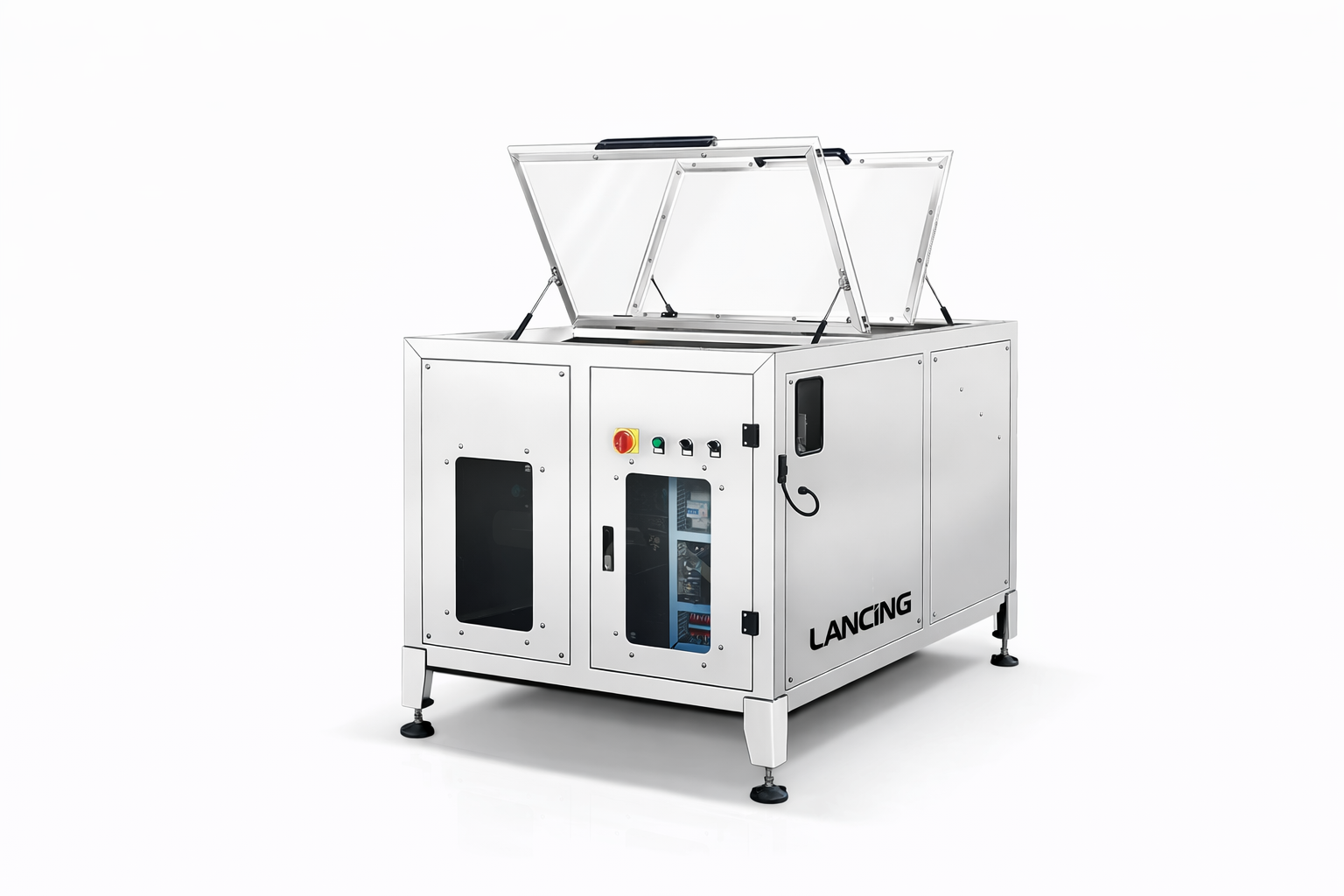
Automatic bottle unscrambler
Automatic bottle unscrambler machinery for production lines
For manufacturers who need a steadier flow of empty bottles before filling, capping, labelling or coding equipment.
Specification advice
Choose the machine route around the bottle and the line.
When an automatic bottle unscrambler is the right route
An automatic bottle unscrambler is normally specified when manual bottle loading is limiting the line, when operators are spending too much time correcting bottle orientation, or when downstream equipment needs more consistent infeed. It can reduce stoppages before fillers, cappers and labellers by presenting bottles in a more controlled stream.
Specification points that matter
The correct machine depends on bottle diameter, height, base stability, empty weight, plastic stiffness, production speed, conveyor height and the transfer point into the next machine. A practical specification should also consider changeovers, cleaning access, guarding and operator loading height.
Typical applications
Automatic unscrambling is commonly used for plastic bottles in cosmetics, household chemicals, food and drink, pharmaceutical-style containers, contract packing and other packaging lines where empty containers must arrive consistently at the first powered machine.
Lancing UK support
Send bottle details and target output for a practical shortlist.
Lancing UK can review the bottle format, downstream machinery and available floor space before recommending a compact rotary bottle feeder, automatic bottle unscrambler or wider infeed solution.
Request a bottle unscrambler shortlist
Questions
Common specification questions.
How fast can an automatic bottle unscrambler run?
Typical output depends on bottle size and behaviour. The LU-LP150 route is listed at 30–60 bottles per minute for suitable small plastic bottles.
Can it feed straight into a filling line?
Yes, provided the transfer height, conveyor width, accumulation and controls are matched to the filling machine infeed.
LU-LP150 specification evidence
Use the published range as a screening point, then prove the real bottle.
The LU-LP150 is the automatic route shown for small plastic bottles where manual arrangement is restricting the line. Published data should be checked against representative bottles and the complete outfeed into the next machine.
| Published parameter | Reference value | What still needs confirmation |
| Working speed | 30–60 bottles/min | Sustainable output with the actual bottle, loading pattern, line stops and downstream demand. |
| Suitable bottle range | Diameter 20–100 mm; height 20–150 mm | Base stability, wall stiffness, neck/shoulder geometry and whether all planned formats share a practical setup. |
| Power and voltage | 1000 W; 220V 50Hz | Final electrical connection, isolation and site responsibilities. |
| Machine size and weight | About 1100 × 1616 × 1163 mm; about 260 kg | Loading access, guarding clearance, maintenance access, outfeed direction and connection to the line. |
View the first-party LU-LP150 machine page for the published specification source.
Bottle trial and changeover
Test the difficult bottle, not only the easiest format.
Automatic bottle arrangement is most useful when the real container can be presented repeatedly without tipping, bridging or excessive contact. The trial set should include the smallest, largest and least stable bottles in the proposed range. Inspect visible surfaces after the run for scuffing or marking and confirm whether any guide adjustment or dedicated change part is required.
Ask for a continuous orientation video that shows bulk loading, bottle movement, outfeed presentation and the transfer into the downstream conveyor. Include planned stops, restart and a controlled recovery test so the operator procedure is understood before site commissioning.
Use the bottle sample testing guide
Smallest, largest and least stable bottle samples
Loading method and operator reach
Guide settings and change-part record
Outfeed direction and conveyor height
Scuffing and deformation inspection
Stop, restart and jam-recovery evidence
Integration boundaries
Keep specialist line elements with the correct engineering owner.
The automatic unscrambler page owns bottle arrangement and infeed selection. Use related Lancing domains for specialist conveyor, rinsing, closure-feeding or complete-line work.
Use this route for conveyor selection, buffer design, transfer stability and line layout.
Use this route where the main requirement is air, water or automatic bottle rinsing.
Use this route when the brief includes the wider filling, capping, labelling, controls and handover scope.
Automatic-route questions
Questions buyers should answer before final selection.
Does the 30–60 bottles/min figure apply to every bottle?
No. It is published reference data. The actual sustainable result depends on bottle geometry, loading, changeovers, downstream demand and the complete line setup.
What bottle sample set should be tested?
Include the smallest, largest and least stable bottles, plus any format with a different base, shoulder, wall stiffness or presentation requirement.
How should bottle scuffing be assessed?
Inspect representative clean bottles before and after the trial under suitable lighting, especially at contact points, guide rails and transfers.
What should be recorded during a jam-recovery test?
Record detection, stopping, safe access, removal of the affected bottle, restart and whether the same condition immediately repeats.
When may a rotary route be more suitable?
A rotary route may be the simpler starting point when stable bottles only need compact accumulation and controlled delivery rather than automatic arrangement.
What line information is needed with the bottle samples?
Provide the conveyor height and direction, downstream machine, sustained target output, available footprint, access restrictions and control/interface requirements.
Orientation evidence
Record the full automatic arrangement route, not only the outfeed.
A useful demonstration should show how bottles enter the machine, how they are arranged, how rejected or unstable bottles behave, and how the outfeed transfers into the next conveyor. Edited close-ups of a successful outfeed do not show whether the complete route is stable.
| Video view | What should remain visible | Question answered |
| Loading and settling | The representative loading method, bottle crowding and the point where bottles enter the arrangement process. | Does the normal loading method create bridging, excessive pressure or manual assistance? |
| Arrangement route | Bottle movement through the machine, including any recirculation or bottle that does not present correctly on the first attempt. | Can the bottle geometry be handled consistently rather than only in a selected best-case sequence? |
| Outfeed presentation | The bottle attitude, spacing, guide contact and the complete handover into the downstream conveyor. | Does the delivered bottle condition suit the filler, capper or labeller infeed? |
| Planned stop and restart | Downstream stop, bottle build-up, machine response, restart and the first bottles after recovery. | Does the route restart without uncontrolled pressure, surging or repeated manual correction? |
| Changeover extremes | The smallest, largest and least stable approved bottles, with settings or dedicated parts identified. | Is the claimed bottle family supported by repeatable settings and evidence? |
If the project only needs compact accumulation and bottles remain stable without controlled orientation, compare the rotary bottle unscrambler route. Use the sample-testing guide for stability, surface inspection and recovery evidence.
Use production-condition bottles for the evidence pack wherever possible. Decoration, mould variation, wall stiffness and bottle storage can change the way an empty container settles and presents. Keep the camera position, loading method and settings consistent between formats so the smallest, largest and least stable bottles can be compared fairly instead of relying on separate edited clips.
Orientation evidence
Record the complete LU-LP150 bottle path from loading to downstream transfer.
A short outfeed clip is not enough to confirm automatic unscrambling. The useful evidence shows how the difficult bottle enters the machine, is arranged, reaches the correct presentation and recovers after a normal stop.
1Identify the format
Record bottle dimensions, material, empty weight and the setting or change parts used for the trial.
2Film bulk loading
Show the real loading method and enough bottles to observe bridging, hesitation or unstable behaviour.
3Follow orientation
Keep the bottle path visible through arrangement, orientation, rejection or recirculation and final discharge.
4Prove recovery
Include a normal downstream stop, restart and return to stable flow without editing out the transition.
| Video view | What it should establish | What to record separately |
| Bulk-load and internal flow | Whether the sample settles, separates and enters the arrangement route consistently. | Loading quantity, operator method and any manual correction. |
| Orientation zone | Whether the agreed bottle presentation is achieved for the full sample set. | Mis-orientation, recirculation, reject or intervention events. |
| Outfeed and transfer | Whether bottles leave upright and stable at the agreed conveyor height and direction. | Guide settings, transfer gap and downstream conveyor speed. |
| Stop and restart | Whether bottle accumulation and restart remain controlled under normal line demand. | Cause of stop, clearance action and time to stable flow. |
Use the full orientation video trial guide and retain the recording with the changeover settings for each approved bottle family.
Automatic-line questions
Questions about stop, restart, loading and changeover on an automatic route.
Automatic bottle presentation must be considered as part of the complete line response, not as an isolated running demonstration.
What should an automatic bottle unscrambler do when the downstream conveyor is full?
The automatic bottle unscrambler should respond to the agreed downstream backup condition without continuing to create an unstable or damaging queue. The exact response may be a controlled stop, reduced feed or another sequence defined by the supplied controls. When the downstream condition clears, the restart should recover flow without releasing an uncontrolled surge of bottles.
The required signal, delay and restart sequence should appear in the project I/O schedule. Use the controls and signals guide to agree the interface.
How should automatic stop-and-restart behaviour be tested?
Run the agreed bottle at normal operating conditions, deliberately create the defined downstream backup, hold the condition long enough to observe the bottle queue, then clear it and record the recovery. Repeat the sequence several times and after the most important changeover. The test should confirm stable bottles, correct signals, no unsafe intervention and a predictable return to flow.
Include this sequence in both the supplier-site and installed-line checks described in the FAT and SAT guide.
What makes an automatic bottle unscrambler harder to change over?
Changeover becomes more involved when bottle-specific guides, pockets, chutes, sensor positions, heights or timing settings must change together. Large differences in bottle diameter, height, base shape or orientation requirement can create more work than a simple guide adjustment. The quotation should distinguish adjustable settings from dedicated change parts and state how the final setup is recorded.
Use the current changeover evidence guide to define the settings sheet, parts list and repeatability check.
How should operators replenish bottles without disrupting automatic flow?
The loading method should let operators replenish bottles safely without suddenly overfilling the feed area or starving the line. Agree the normal batch quantity, low-level indication, access position and maximum loading condition. Operator reach, container handling and the path used to bring bottles to the machine should be reviewed during the layout survey, not after installation.
The site-survey guide lists the access, loading and service information needed to confirm the arrangement.
Automatic-route evidence
Confirm the bottle, orientation and controls evidence before order.
An automatic route should be supported by representative bottles and a line-ready interface brief rather than a headline speed alone.
Include the smallest, largest, lightest and least stable empty bottles expected in production.
Capture loading, arrangement, discharge, stop, restart and recovery for the agreed bottle family.
Agree downstream demand, backup, fault, reset and retained-conveyor responsibility before release.
Record adjustments, change parts and settings needed to repeat the approved result.
Week 2 buyer questions
Questions about static, airflow and representative bottle testing.
Lightweight bottles can behave differently as material, environment and contact history change. Keep uncertain performance trial-dependent.
How can static charge affect small plastic bottles in an automatic unscrambler?
Static charge can make lightweight plastic bottles cling to each other, guides, guarding or contact surfaces instead of separating predictably. Symptoms may include intermittent doubles, bottles following an unexpected path, inconsistent release and behaviour that changes with material, humidity or handling. The machine route should be tested with the real empty bottles under representative conditions. Static should be treated as a variable to observe, not as a performance figure to assume.
How can air movement affect lightweight bottle orientation?
Air movement from nearby equipment, extraction, open doors or deliberate air assistance can disturb very light bottles before they are mechanically controlled. A bottle may rotate, lean or change position between the arranging section and outfeed even when the machine is correctly set. Trials should note the surrounding airflow, repeat the same stop/restart conditions and separate airflow effects from faults caused by guides, transfers or excessive speed.
Which bottle-family extremes should be tested on an automatic route?
Test the formats that challenge different parts of the route: the lightest bottle for static and airflow, the tallest or narrowest-base bottle for stability, the widest or shortest bottle for guides and spacing, the softest bottle for pressure, and any format with a difficult shoulder or orientation requirement. A family may therefore need several governing samples rather than one nominal bottle representing the whole range.
How should an orientation video be recorded for supplier evidence?
Record an unbroken view that shows bottle loading, disorder in the bulk section, the arranging or orienting action, single-file outfeed, transfer to the downstream conveyor and recovery after a planned stop. Include enough bottles to show repeatability rather than one successful cycle. Identify the bottle format, machine settings and trial condition in the record. Avoid tight edits that hide a blockage, manual correction or unsuccessful restart.
What should be inspected after an automatic bottle trial?
Inspect bottles for fresh scuffs, dents, deformation, contamination and marks at repeated contact points. Check that guides, discharge rails, sensors and change parts remain secure and that no bottle debris has collected in the path. Review rejected or manually corrected bottles separately from successful output. The trial record should connect any observed condition to the bottle format, machine setting and point in the route where it first appeared.
Request a bottle unscrambler shortlist
Loading and access
Questions about loading an automatic bottle unscrambler in production.
The arrangement mechanism cannot be assessed separately from bottle replenishment, operator access and the way the line responds to stops.
How should the bulk-loading method be agreed for an automatic bottle unscrambler?
Define the source of empty bottles, the normal amount added at one time, how often replenishment is expected and the point at which the machine should request more bottles. The agreed method should be reproduced during the trial because bottle crowding, separation and static can change when the loading pattern changes.
Which access points should be checked before the automatic route layout is frozen?
Check the normal bottle-loading position, guard doors, electrical controls, inspection points, change-part access, cleaning access, discharge transfer and the space needed to clear a blockage safely. Also confirm that nearby conveyors or machines do not obstruct a routine task. These checks belong in the site survey and installed-layout review.
Why should the operator be able to see the bottle path during loading?
A clear view helps the operator recognise bridging, unusual accumulation, bottle damage and poor separation before the condition reaches the discharge. It also supports consistent replenishment and quicker fault reporting. Visibility should be considered with guarding and access; it should not depend on bypassing a guard or reaching into the machine.
What automatic-route settings should be recorded for each bottle format?
Record the approved machine speed or control range, guide positions, relevant sensors, bottle-level settings, dedicated change parts, discharge settings and first-bottle verification checks. Include the bottle ID and sample evidence used to accept the setup so that a later changeover can return to the same proven condition.
Request a bottle unscrambler shortlist