
UK packaging machinery support 01494 623015

Bottle unscrambler range

Machine options for bottle feeding, sorting and line infeed.

Compare the available Lancing UK bottle unscrambling routes by output, bottle size, footprint and downstream interface.

LU-LP150 automatic bottle unscrambler for production line

Pro range

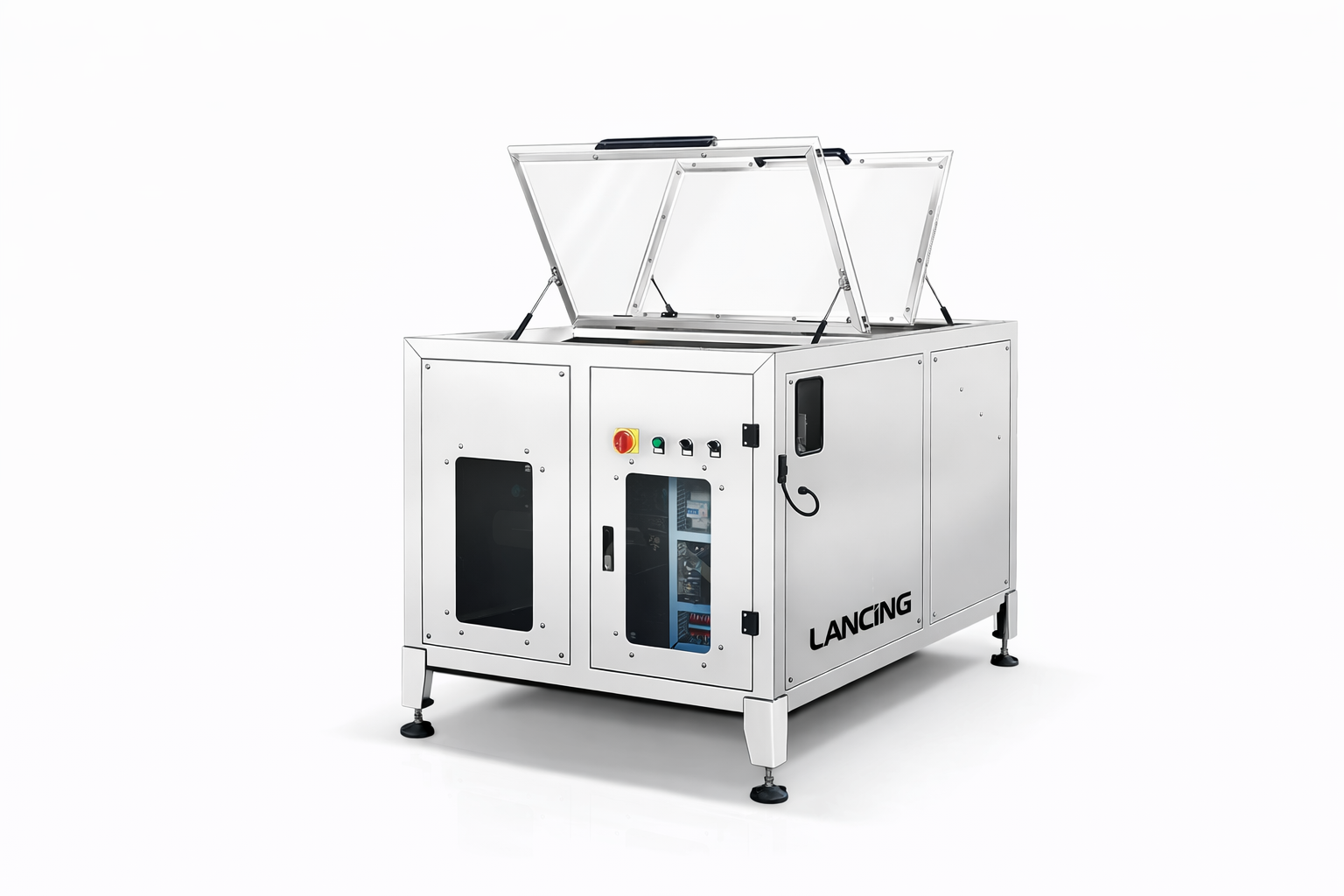
LU-LP150 automatic bottle unscrambler

A fully automatic bottle unscrambler designed to streamline production by arranging small bottles before labelling, filling or capping. It is a strong route where manual handling is reducing the performance of the wider packaging line.

Working speed30–60 bottles/min
Suitable bottlesØ20–100 mm · H20–150 mm
Power1000 W
Voltage220V 50Hz
Machine sizeAbout 1100 × 1616 × 1163 mm
WeightAbout 260 kg
Enquire about LU-LP150
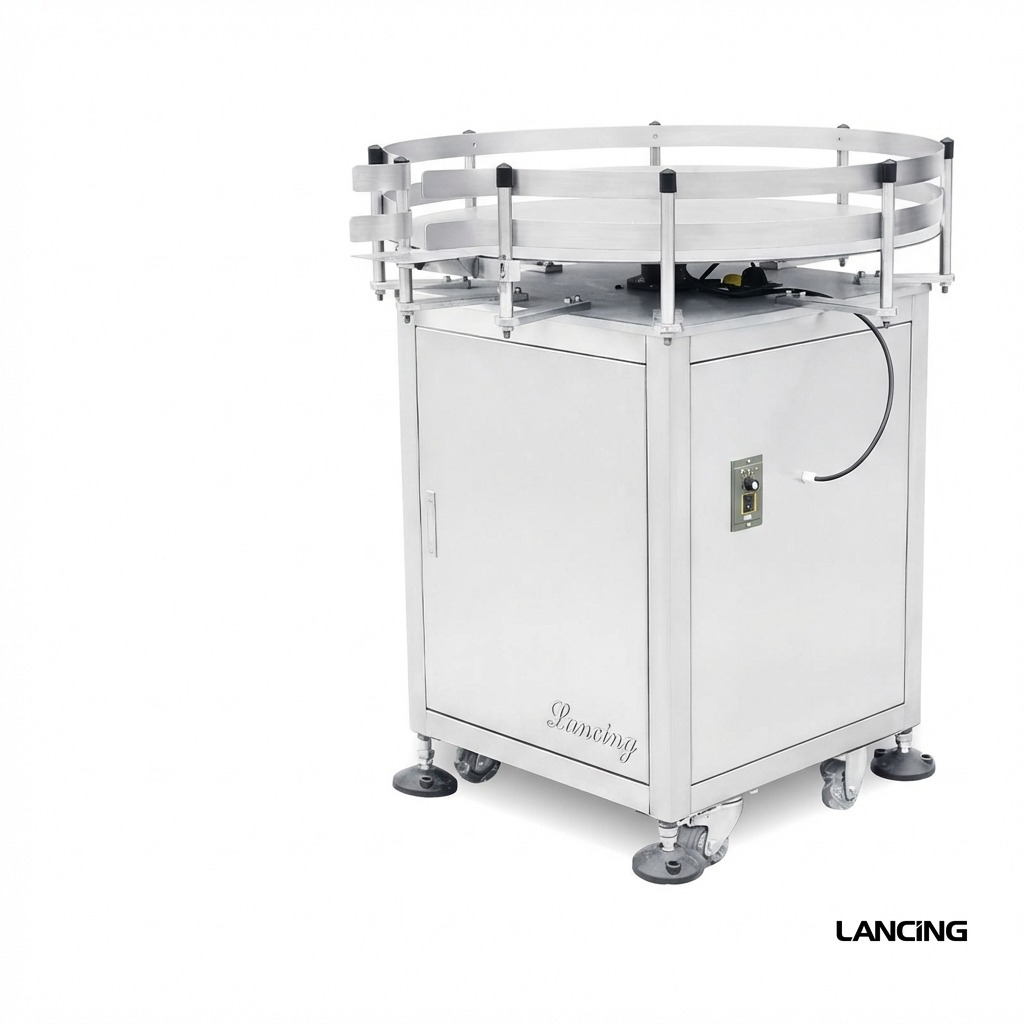
LU-SP800 compact rotary bottle unscrambler

Compact route

LU-SP800 automatic bottle unscrambler for production line

A compact stainless steel rotating-disc unscrambler for automating bottle feeding into downstream equipment. Useful where the line needs controlled bottle delivery without a larger fully automatic orientating system.

Capacity2400–3600 BPH
Turntable800 mm · 10 rpm
Bottle sizeØ20–100 mm · H30–120 mm
Motor power120 W
Machine size850 × 850 × 1500 mm
Weight50 kg
Enquire about LU-SP800

Selection table

How to compare the routes.

Project needBest starting routeWhy it matters
Simple low-to-medium speed bottle feedLU-SP800 rotary tableCompact footprint and simple rotary presentation.
Reduced manual loading for small bottlesLU-LP150 automatic unscramblerMore controlled automatic arrangement before downstream machinery.
Existing line bottleneckIntegration reviewHeight, transfer, accumulation and controls may decide the final machine.
Multiple bottle sizesChangeover-led specificationFuture formats may change guides, rails, outfeed and tooling.

Technical comparison and trial brief

Use the published model data with bottle trials and line-interface checks.

The two routes solve different bottle-handling problems. A compact rotary table can provide controlled accumulation and delivery, while the automatic route is intended for projects where bottle arrangement is the greater constraint. Sustainable output still depends on the bottle, transfer design, changeover and downstream demand.

Comparison pointLU-LP150 automatic routeLU-SP800 rotary route
Published output30–60 bottles/min2400–3600 BPH
Published bottle rangeDiameter 20–100 mm; height 20–150 mmDiameter 20–100 mm; height 30–120 mm
Published machine data1000 W; 220V 50Hz; about 1100 × 1616 × 1163 mm; about 260 kg800 mm turntable at 10 rpm; 120 W; 850 × 850 × 1500 mm; 50 kg
Best starting questionDoes the line need bottles to be automatically arranged before outfeed?Can stable bottles be accumulated and released from a compact rotating disc?
Changeover evidenceConfirm guide settings, outfeed adjustments and whether any bottle format needs dedicated change parts.Check guide rails, disc behaviour, outfeed gap and the smallest and least stable bottle in the range.

Source model pages: LU-LP150 automatic bottle unscrambler and LU-SP800 rotary bottle unscrambler.

Trial and acceptance evidence

Record the operating evidence that matters to production.

A machine demonstration should use representative bottles and include more than a short best-case run.

1

Stability and scuffing

Run clean representative bottles and inspect for tipping, rubbing, marking or deformation at loading, accumulation and transfer points.

2

Orientation and outfeed

Record a clear video from loading through outfeed so presentation, guide behaviour and downstream handover can be reviewed.

3

Stop, restart and recovery

Include planned stops and a controlled blocked-bottle condition to show how the system restarts and how operators recover a jam safely.

4

Changeover extremes

Test the smallest, largest and least stable bottle rather than relying only on a single easy format.

Machine selection questions

Questions to answer before a final quotation.

Which route is better for unstable or lightweight bottles?

The bottle should be trialled. Stability, empty weight, base geometry, wall stiffness and the transfer into the downstream conveyor may favour a more controlled automatic route or a redesigned conveyor interface.

Does the published output guarantee the same output on every bottle?

No. Published figures are reference data. Sustainable output depends on the actual bottle, loading method, changeovers, line stops, accumulation and downstream machine demand.

What change parts may be needed?

The exact requirement is sample-led. Guide rails, outfeed gaps and format settings may be adjustable, while significantly different bottle geometries may require dedicated parts or a different machine route.

What should an orientation video show?

It should show representative bottles entering the machine, being arranged or accumulated, leaving the outfeed and transferring into the next conveyor without the camera cutting away from problem points.

How should jam recovery be checked?

Agree a safe controlled test that demonstrates detection, stopping, operator access, removal of the affected bottle and repeatable restart without creating a second blockage.

When should a conveyor specialist be involved?

Use Packaging Conveyors UK when accumulation, conveyor type, transfer geometry or line buffering is the principal engineering requirement.

Continue the specification

Use the strongest owner page for the next decision.

Complete line integration

Use the complete-line route when the project includes filling, capping, labelling, controls and commissioning.

Changeover and handover

Record how each bottle format is set, transferred and accepted.

The published model ranges define the first screening step. The production handover should also identify the settings, dedicated parts, transfer condition and evidence required for every bottle family that will be released to operators.

Handover itemLU-LP150 automatic routeLU-SP800 rotary routeEvidence to retain
Bottle-family matrixGroup formats by diameter, height, geometry, empty weight and the arrangement behaviour seen during trial.Group formats by diameter, height, base stability and behaviour on the rotating disc and outfeed.Approved bottle list with the smallest, largest and least stable formats identified.
Adjustments and change partsRecord guide, outfeed and presentation settings, and identify any format that needs dedicated parts rather than adjustment alone.Record guide-rail, disc-loading and outfeed settings, and identify any dedicated format parts.Settings sheet, labelled part list and a clear first-bottle verification step.
Downstream transferConfirm presentation, line direction, working height and the handover into the retained or supplied conveyor.Confirm guide transition, conveyor gap, bottle pressure and the condition at the downstream handover.Layout, measured interface points and a video of normal transfer.
Stop and restartShow how the arranged bottle stream responds to a planned downstream stop and repeatable restart.Show how accumulation develops during a planned stop and whether bottles recover without surging or tipping.Uncut stop/restart record with sensors, bottle flow and transfer point visible.
Operator accessConfirm loading, adjustment, inspection and safe recovery access around the automatic arrangement route.Confirm table loading, guide adjustment, inspection and safe recovery access around the rotary route.Operator method, access notes and outstanding actions before production release.

Use the sample-testing protocol, changeover guide and line-integration guide to make supplier demonstrations comparable.

The final handover pack should separate verified settings from open items. If a bottle has not been trialled, record it as unverified rather than assuming it will run because it sits inside a published diameter or height range. This makes future format additions easier to manage and gives operators a clear boundary between approved production settings and engineering work still to be completed.

Published data versus project proof

Use the published model figures to screen the route, then prove the operating envelope.

The LU-LP150 and LU-SP800 figures support an initial comparison. Final suitability still depends on the sample bottle, the format range and the way each machine hands bottles to the production conveyor.

QuestionLU-LP150 automatic routeLU-SP800 rotary routeEvidence to retain
What does the published output indicate?30–60 bottles/min for the stated bottle range.2400–3600 BPH for the stated bottle range.Observed sustained feed during the agreed trial, with bottle format and downstream demand recorded.
What bottle range screens the enquiry?Diameter 20–100 mm and height 20–150 mm.Diameter 20–100 mm and height 30–120 mm.Approved sample list covering the smallest, largest, lightest and least stable formats.
What must the trial prove?Bulk loading, arrangement, orientation, discharge, normal stops and restart.Disc loading, accumulation, bottle contact, discharge, normal stops and restart.Continuous video, surface inspection, jam log and outfeed-transfer record.
What must be agreed for changeover?Guide or change-part requirements and repeatable settings for each bottle family.Disc/guide adjustments, bottle stability boundary and repeatable outfeed settings.Settings sheet, changeover sequence and production handover record.

Use the sample-testing guide, damage-trial guide and orientation-video guide to define the evidence expected before final acceptance.

Technical handover

Ask for a complete machine and format record, not only a model description.

Approved bottle schedule and trial samples

Machine layout and infeed/outfeed direction

Format settings and change-part identification

Controls boundary and downstream stop/start behaviour

Trial video and surface-condition record

Operator recovery, cleaning and routine-check instructions

Quotation comparison

Questions buyers should resolve before comparing machine prices.

The LU-LP150 and LU-SP800 routes solve different bottle-feeding problems. Compare scope, evidence and integration responsibility before comparing the final figure.

How should two bottle unscrambler quotations be compared fairly?

Compare both quotations against the same bottle set, sustained output target and line boundary. Then normalise what is included: bottle loading, outfeed conveyor, guarding, controls, change parts, sample trials, factory acceptance testing, installation, commissioning, documentation and support. A lower machine price is not directly comparable if key interfaces or proof activities are excluded.

Create one comparison schedule and ask each supplier to mark inclusions, exclusions and assumptions. The supplier-question checklist provides a structured starting point.

What does sustained output mean for bottle handling equipment?

Sustained output is the rate maintained over an agreed representative run while the machine experiences normal bottle replenishment, recirculation, downstream backup and controlled restart. It should be measured as acceptable bottles delivered at the defined handover point, not the fastest short burst seen during setup. The run conditions and permitted interventions must be written down before the test.

Use the FAT and SAT acceptance guide to define the evidence, stop events and records that support a meaningful output statement.

Which bottle format should define the machine selection?

The machine selection should be challenged with the bottle most likely to expose a limitation, not only the easiest format. That may be the tallest, lightest, softest, smallest-base, most decorated or most orientation-sensitive bottle. The full range still matters, because a route that handles the difficult bottle may require impractical changeover for the rest of the formats.

Identify the boundary samples in the sample-testing guide and record the final adjustments in the changeover guide.

What evidence should accompany a bottle unscrambler recommendation?

A recommendation should identify the exact bottle samples reviewed, the proposed machine configuration, the assumed line interface, the expected changeover method and any conditions that still require testing. Where a trial is available, retain continuous video, final settings, observed stoppages, bottle-condition notes and an action list. A model name alone is not enough evidence.

The orientation-video guide explains what the recording should show, and the acceptance guide turns the evidence into a usable decision record.

Evidence route

Choose the next evidence step after the machine shortlist.

The machine route is only provisional until the governing bottle, transfer point, changeover and acceptance checks are agreed.

FAT and SAT acceptance

Use one bottle set and one agreed acceptance record from factory trial to site handover.

Week 2 buyer questions

Questions that make automatic and rotary machine proposals comparable.

Use the same bottle, layout and evidence schedule for every supplier so model and price comparisons cover the same project scope.

How should published machine speed be used when comparing bottle unscramblers?

Published speed is a screening figure, not proof that every bottle will run at that rate. Compare it with the actual bottle geometry, stability, loading method, transfer arrangement and downstream demand. Ask how the figure will be demonstrated with representative samples and what stop, restart and accumulation conditions are included. A useful comparison separates the published range from the bottle-specific operating envelope that still needs to be proven.

Which bottle should be treated as the worst-case format during machine selection?

The worst-case bottle is the format most likely to govern reliable operation, not automatically the smallest or largest. It may be the lightest bottle, the tallest relative to its base, the softest material, the format with the most difficult shoulder or the pack most sensitive to surface marks. Identify the likely governing formats for stability, orientation, changeover and cosmetic condition, then include those bottles in the trial schedule.

What change-parts information should a supplier provide before order?

The proposal should identify which bottle formats use adjustment only and which need dedicated parts, guides or settings. For each format family, record the relevant part reference, fitting location, adjustment points, expected operator tools and the first-bottle checks required after changeover. Unknown requirements should remain trial-dependent rather than being presented as confirmed. This gives production a controlled basis for future format changes.

How should machine footprint and operator loading access be compared?

Compare the complete installed envelope, not only the machine body. Include guard opening, operator loading position, access for cleaning and maintenance, removal of change parts, electrical-panel access, discharge conveyor and the space required to clear a blockage safely. A compact machine can still be unsuitable if the loading method creates awkward reach, poor visibility or conflict with retained equipment.

What evidence should be requested before comparing machine prices?

Request the same evidence schedule from every supplier: published model data, confirmed bottle range, representative trial plan, orientation or bottle-flow video, stop/restart record, surface-condition inspection, changeover requirements, layout, utilities, controls boundary and acceptance criteria. Price comparison is meaningful only when each proposal covers the same bottle set, interfaces and proof obligations. Otherwise, a lower headline price may exclude work needed to make the line operate reliably.

Request a bottle unscrambler shortlist

Machine comparison readiness

Compare how each route will be loaded, accessed and handed over.

Headline capacity does not show the operator work or production evidence needed around the machine. Compare those duties on the same basis.

How should buyers compare operator loading between automatic and rotary routes?

Compare the source of bottles, normal replenishment pattern, operator position, visibility of the bottle path, access around guards and the effect of batch loading on bottle crowding. A compact rotary route may rely more directly on disciplined loading and stable bottle circulation, while an automatic route still needs an agreed bulk-loading method and safe replenishment plan. The comparison should use the real bottle family and production routine.

What should a bottle unscrambler handover pack contain?

A useful handover pack contains the approved format matrix, settings and change parts, layout and interface drawings, controls and fault descriptions, trial and acceptance evidence, cleaning and inspection checks, safe recovery sequence, training record and open-items register. It should identify which conditions are proven and which remain bottle- or site-dependent.

How should the installed access envelope be compared between machines?

Compare the complete working envelope rather than the machine body alone. Include loading position, guard opening, electrical-panel access, cleaning and maintenance access, change-part removal, jam-clearance space and the discharge conveyor. A compact footprint is not useful if routine access conflicts with nearby equipment or forces an inconsistent loading method.

Can the bottle loading method change which machine route is suitable?

Yes. The same bottle may behave differently when added steadily, loaded in larger batches or allowed to build up before the outfeed. Loading can alter crowding, static, overlap and contact pressure. The trial should therefore reproduce the intended production loading method instead of feeding bottles one at a time under ideal conditions.

Request a bottle unscrambler shortlist

Specification support

Send the bottle format and line speed. Get a sensible machine shortlist.

Lancing UK can advise whether a compact rotary unscrambler, automatic bottle unscrambler or wider line-infeed package is the correct route.

Request a bottle unscrambler shortlist
Call now