
When this route is worth checking
Lines where bottles queue, skew or jam before a filler or labeller. The key is to confirm how the empty bottle behaves before the line is committed to a specific feeding method.
Jam reduction
Jams at bottle transfer points are often caused by a mismatch between bottle geometry, rail setting, conveyor speed and upstream feeding method.
Specification focus
Lines where bottles queue, skew or jam before a filler or labeller. The key is to confirm how the empty bottle behaves before the line is committed to a specific feeding method.
Transfer gap, rail profile, conveyor speed, bottle base and accumulation. These details influence whether a compact rotary feeder, automatic unscrambler or wider infeed package is the better route.
A more controlled handover between bottle feed and downstream equipment. The correct result is a reliable infeed, not just a machine that looks fast on paper.
Buyer notes
For bottle transfer jam reduction, the bottle sample is the most important starting point. Small differences in diameter, wall stiffness, neck shape or base contact can change how bottles feed and transfer.
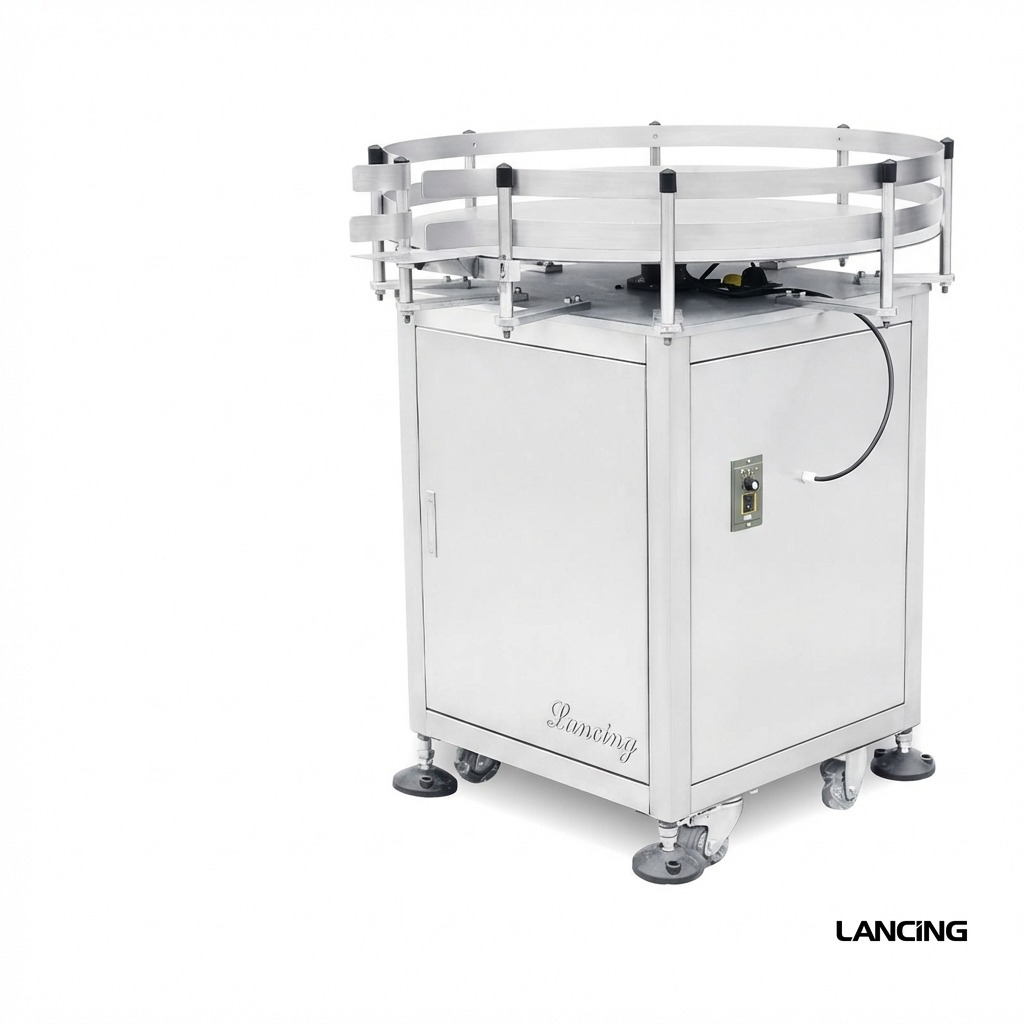
Send photos or samples with the target production speed and downstream machinery details. Lancing UK can then advise whether the project suits a rotary bottle feeder, automatic bottle unscrambler or integrated infeed section.
Questions
It is a useful starting point if your project matches the bottle type, line stage or problem described here. The final machine choice should still be checked against bottle samples, speed and available floor space.
Send bottle height, diameter, material, empty weight, sample photos, target output, downstream machine details, conveyor height and any problems currently seen on the line.
Usually yes, but the transfer height, available footprint, conveyor interface, guarding and controls need to be reviewed before the machine route is confirmed.
Related pages
Open this page for related bottle unscrambler specification advice.
Open this page for related bottle unscrambler specification advice.
Open this page for related bottle unscrambler specification advice.
Open this page for related bottle unscrambler specification advice.
Open this page for related bottle unscrambler specification advice.
Open this page for related bottle unscrambler specification advice.
Open this page for related bottle unscrambler specification advice.
Open this page for related bottle unscrambler specification advice.
Failure-mode review
A jam at the filler or labeller may begin earlier in the route. Record the first abnormal bottle movement rather than only the final blocked point.
| Observed problem | Potential area to inspect | Evidence to collect |
|---|---|---|
| Bottles bridge during loading | Hopper/load pattern, bottle geometry and bulk pressure. | Video of loading and the first point of bridging. |
| Bottles tip at outfeed | Guide transition, conveyor gap, speed change and centre of gravity. | Side-view slow video and measured transfer geometry. |
| Bottles scuff in accumulation | Back pressure, rail contact, disc/table loading and dwell time. | Before/after sample inspection and line stop test. |
| Repeated blockage after restart | Sensor position, uncleared root cause, guide setting or downstream queue. | Stop/recovery sequence showing whether the same fault returns. |
| Downstream machine starves | Sustainable feeder rate, accumulation buffer and controls response. | Timed line sequence covering normal production and short stops. |
Recovery test
Use an agreed representative blocked-bottle or downstream-stop condition without bypassing safety systems.
Record sensors, stop behaviour and whether bottle pressure continues to build.
Confirm isolation, access and the operator action needed to remove the cause.
Restart from the documented condition and confirm that the same blockage does not immediately return.
Recovery record
A bottle may finally jam at the filler or labeller even though the first instability began at loading, accumulation, a speed change or an earlier guide transition. Record both points so the corrective action addresses the cause rather than only the place where the line stopped.
| Record field | What to capture | Why it matters |
|---|---|---|
| First abnormal movement | The first bottle that leans, rotates unexpectedly, hesitates, overlaps or makes unusual guide contact. | Identifies the start of the failure sequence before the final blockage. |
| Final blocked point | Exact location, bottle position, queue condition and the downstream machine state. | Shows how the initial instability develops into a production stop. |
| Detection and stop | Sensor response, machine stop order and whether bottle pressure continues to build. | Confirms whether the line contains the fault or makes it worse. |
| Safe clearance | Isolation/access method and the minimum operator action required to remove the cause. | Creates a repeatable recovery method without normalising unsafe intervention. |
| Restart condition | Bottle queue, guide position, sensor state and the first bottles after restart. | Shows whether the line returns to stable flow or immediately repeats the fault. |
| Corrective action | Guide, transfer, speed, accumulation, loading or bottle-format change made after the observation. | Allows the same condition to be retested and compared objectively. |
Keep loading, the first failure point, the final blockage and the restart in one continuous video where possible. Use the integration guide when the fault crosses a machine or controls boundary, and the sample-testing guide when bottle stability or surface condition needs controlled comparison.
After a corrective action, repeat the same loading condition and downstream-stop sequence. A successful restart on a different bottle queue does not prove that the root cause has been removed. Retain the previous and revised settings together so the change can be compared, and record any remaining condition that still needs a controlled trial before production release.
Jam closeout record
The place where the line stops is not always where the fault began. A useful record follows the bottle upstream and distinguishes bottle geometry, guide setting, transfer, controls and downstream backup.
| Record field | What to capture | How it supports correction |
|---|---|---|
| First abnormal event | First hesitation, tip, overlap, incorrect presentation or contact with a guide. | Points the review towards the initiating condition rather than only the final blockage. |
| Operating state | Bottle format, machine setting, line speed, loading method and downstream condition. | Makes the event repeatable enough to verify a correction. |
| Detection and stop | Sensor response, machine state and whether more bottles entered the affected zone. | Shows whether controls limit the jam or allow it to grow. |
| Safe clearance | Isolation/stop state, bottles removed, guides adjusted and operator access used. | Creates a defined recovery method for training and handover. |
| Restart result | First bottles after restart, time to stable flow and recurrence during the repeat run. | Confirms whether the correction addressed the root cause rather than temporarily clearing it. |
Link the event to the relevant controls and interface record, format settings and continuous video evidence.
Jam diagnosis
Jam reduction depends on identifying where the first bottle loses control and whether the machine, transfer, conveyor or downstream stop owns the cause.
Find the first abnormal bottle movement, not the largest pile-up. Use time-stamped video and note the bottle identity, machine state, sensor state, downstream demand and transfer location when the first bottle hesitates, tips, overlaps or turns. The final blocked queue may be several stages away from the event that caused it.
A simple event log should state the first location, probable owner, recovery action and whether the same event repeats under the same condition.
Operators should not reach into moving equipment, defeat guards or interlocks, force a restart against a blocked bottle, or make unrecorded adjustments that bypass the agreed recovery method. The site-specific safe system must define isolation, stored-energy control, access and reset. Only trained and authorised people should carry out the permitted recovery steps.
The safety and guarding guide explains the information the buyer and supplier must resolve before production.
Record every event by bottle format, location, line state, probable cause, recovery action and recovery time. Separate a one-off damaged sample from a repeatable failure that occurs at the same transfer or operating condition. Also record the number of bottles or elapsed run time between events so the result is more useful than a simple total jam count.
The test record should show whether a setting change removed the cause or only moved the problem to another location.
A conveyor or transfer change is the stronger owner when bottles leave the unscrambler in a stable, controlled stream and the first failure appears later at a height mismatch, guide transition, speed change, curve or excessive downstream back pressure. Replacing the unscrambler will not correct a fault that begins after its defined handover point.
Use the integration page to define the handover boundary and consult Packaging Conveyors UK when the conveyor system owns the issue.
Week 2 buyer questions
Record the first abnormal bottle movement and prove a controlled recovery rather than documenting only the final blockage.
A pressure-related jam usually develops after bottles accumulate against a restriction, while an orientation jam begins when a bottle enters a guide or transfer in the wrong attitude. Review the first abnormal movement, not only the final pile-up. Note whether the queue was already compressed, which bottle contacted the restriction first and whether the same failure occurs with lower accumulation. Video from upstream of the blockage can reveal the initiating event.
Record the bottle queue length, downstream condition, sensor state, conveyor speeds, table level, guide setting and the first point where bottles begin to lean, deform, ride up or stop moving freely. Exact force values should not be claimed unless they are actually measured with a defined method. Qualitative evidence is still useful when the trial condition is repeatable and linked to the bottle format and machine setting.
After safe isolation and clearance under the agreed procedure, confirm that no bottle, part or tool remains in the path. Restore the line in the defined sequence and observe whether bottles release gradually, sensors clear correctly and the downstream machine accepts the returning flow. Repeat the condition where it is safe and justified. The restart is not proven if it depends on unrecorded manual repositioning or a different machine setting.
Inspect bottles for deformation and fresh marks, then check guides, transfer plates, sensors, fasteners and change parts for movement or damage. Remove debris before restarting and verify that the original settings have not shifted during clearance. Retain any damaged bottle that helps identify the contact point. If the jam involved a safety function, follow the competent site procedure and confirm the required reset/validation before production resumes.
Stop the trial when repeated instability, bottle damage or unsafe intervention remains after reasonable documented adjustment within the intended machine route. Do not continue increasing speed or pressure to obtain one successful sequence. A different route should be reviewed when the bottle needs more positive orientation, cannot tolerate normal accumulation contact, remains unstable at the transfer or requires changes that conflict with safe access and the available footprint.
Repeat-fault ownership
A jam record should identify the first abnormal event, the corrective change and the evidence that the condition no longer repeats.
Treat it as a design or setup issue when the same bottle fails at the same location under the approved loading and line conditions, especially after trained operators follow the agreed recovery method. Repeated dependence on pushing, holding or repositioning bottles is evidence that the route, guides, transfer, control response or bottle operating envelope needs review.
Record the original failure, bottle format, line condition, change made, revised settings, repeat test, downstream stop and restart result, bottle condition and whether operator intervention was still required. Update the format sheet and drawing if the correction changes a guide position, sensor, transfer or control sequence.
Escalate when the recovery method is not documented, the blockage involves a guard or control boundary, bottle damage is increasing, the same fault returns after reset, or operators need an improvised action to restart the line. Production should not normalise a repeated fault that changes the accepted operating condition.
Specification support
Lancing UK can advise whether a compact rotary unscrambler, automatic bottle unscrambler or wider line-infeed package is the correct route.